Posts tagged: money

Choosing the best retirement plan for a secure future

Financial retirementA financially secure future is what most of us are constantly working towards. We set a portion of our funds aside for a safe future, invest in 401(k) plans, set up IRA accounts and try investing in sound retirement plans based on part research, part hearsay. Choosing a safe investment vehicle is a matter most people lose their sleep over. Does a 401(k) plan carry interesting tax benefits? Does an IRA account effectively maximize your money? Are bonds a sounder investment option than stocks? These are some questions that might occur to you while trying to choose an optimum retirement plan, which keeps your future out of harm’s way.

The fundamental solution to a retirement plan problem is the understanding of tax benefits and returns that each investment plan offers. The 401(k) plan and the IRA (individual retirement account) are tax free investment options where you don’t have to pay taxes on the money invested or the interest unless you begin receiving benefits. As contributing to these accounts leads to a decrease in your taxable income, you pay lesser taxes overall. However, both methods are fundamentally different from each other and need careful research before they you take a decision.

While the 401(k) plan is set up by your employer, an IRA is an individual choice. The 401(k) plan will allocate similar distributions to employees, while an IRA leaves you with a lot of options as far as investment vehicles go. The 401(k) plan gives you the option of withdrawing money during an emergency; other than reducing your net taxable income. However, when you start to withdraw money from your account, the amount will be taxed as additional income. Also, there are penalties for premature withdrawal.

The IRA comes with its own pros and cons. You don’t need any help from a financial planner as the account is easy to set up. It also gives you a lot of freedom in choosing investment options like bonds, stocks or mutual funds. However, it imposes penalties on premature withdrawal and has a low contribution rate.

Through a 401(k) or an IRA account, you could invest your money in a number of things such as bonds, mutual funds, stocks, real estate and so on. Each profile has a unique risk to returns ratio that must be studied before choosing to invest in. The stock market has always been an enigmatic and unassailable investment option to most. With a high risk and an even higher reward associated with it, a stock portfolio could potentially take your investments to new heights. Bonds do not carry the high risk that stocks do, but neither do they offer promising returns on investment.

Choosing the best plan would require extensive research and an understanding of your financial requirements. Investing in both, IRA and a 410(k) could well be a sound diversification strategy, according to some professionals. Other new age IRA plans like investing in commercial real estate could also be the key to an assured future. Seek expert advice before going for any option available to you.
When retirement finally happens, a retirement plan could be your knight in shining armour. A careful approach towards choosing a sound plan will go a long way in ensuring financial security.


Feel Financial Stability at Every Age

New Financial StabilityMost of us complain about the constant lack of money for various reasons – small salary or continuous expenses that have already tortured us. In fact, it is quite realistic to prevent those expenses and become financially stable and independent. It is only a matter of time and your wishes. At every age, whether you are young or old, you should remember that the earlier you start to think about financial stability and savings the more confidence in future you will have. So, let’s see what we can do for this from our early 20s to the time of retirement.

Youth without debt

When being young and beautiful we do not consider us to be already grown up but we are willing to make something meaningful for society. It is often occurs that our deeds do not succeed and we make many mistakes. Indeed, financial responsibilities are wide opened for us and we should already think about contribution to our retirement. Small amount of money saved monthly will help to feel stability and consider plans for future as it is a definite time to find an appropriate job.

The next thing that we need to think about except work is credit cards repayment. We should remember that our 20s is not the age to build up debt. Applying for credit cards or even for school loans we have to be sure in our ability to repay all money in time or even in advance. We do not need debts in such an early age.

More responsibilities need more expenses

The most appropriate age to obtain more life responsibilities is 30s. At this age we have more income, create our own family and even may think about our ability to purchase a good house (often with the help of mortgage). This will be a good age for those who refused to obtain debt when they were 20 years old. By the way, our contribution into retirement should be raised.

The right time to invest

The best time for savings and investment comes with our 40s. At this age we have a good job to provide your family with all needs and the age for more expenses. We can easy go wrong being not careful with everything that concerns money. We should save more, invest more and also pay more attention to retirement planning to be sure that it is all right.

Everything goes right in your 50s

When you are fifty everything has to be under control. You have made the needed sum of money and now it works on you. Even often expenses will not prevent your financial stability. Pay off your mortgage and continue retirement funding.

Time for retirement

Depending on when you wish to retire, all plans should be done – the debt is repaid and the needed sum of money is already saved. Then you will see that all your efforts were not in vain.

When creating and following plans for retirement you should understand that complaining on the money need will not bring success in your life. So, get rid of bad thoughts and start to think about your financial stability.

Diana is an accomplished financial consultant writing about socio-economic problems as well as legal and financial articles on debt, bankruptcy, fast loans online, stock market, credit card, personal injury on various websites. She has been writing for the last 5 years.

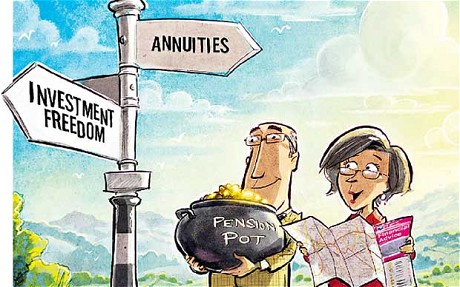
How Does Income Drawdown Work?

Income relatedIncome drawdown can provide a great way to keep you financially comfortable in later life. Here’s a look at how it works.

A Quick Look at Annuities

Income drawdown isn’t complicated, but it can be a little confusing if you’re only familiar with the annuity model of pensions. Annuities work like this: you make regular payments into your pension throughout your working life, and when you retire you use that money to purchase an annuity. An annuity is a financial product that guarantees you a fixed income until the day you die.

The problem with this model is that it may not provide for your needs. Annuity rates are dependent on market conditions, so when you go to retire, there is a chance that you may receive a poor rate. Although the payment is fixed, inflation means that it will decrease each year in real terms.

How Income Drawdown is Different

Instead of cashing in your pension on retirement day, income drawdown allows you to make regular cash withdrawals from your pension, within certain limits. You can vary the payments you receive according to your needs, and the money that you’ve invested will continue to grow.

To avail of income drawdown, you’ll need to choose a financial product such as a SIPP (Self-Invested Personal Pension) with drawdown functionality. SIPPs also offer a huge range of investment choices, giving you the opportunity to grow your fund even further.

What Kind of Payments Can I Get?

There are two types of payment available in an income drawdown pension:

  • Tax-free cash: 25% of your fund is available tax-free and can be withdrawn in instalments or taken as a one-off lump sum.
  • Income: Of the remaining 75%, you can withdraw money as and when you choose. These payments are subject to income tax, and their is a limit to how much you can withdraw each year. This limit is often referred to as the GAD Max, and you can withdraw up to your GAD Max each year. Whether you take this as a monthly payment or an annual lump sum is up to you.

How is My GAD Max Calculated

There are three factors in deciding your GAD limits. Your age and the value of the pension are both taken into consideration, with the intention that your income payments should be balanced in order to ensure a regular pension for the rest of your life. Gilt Yields, a figure issued each month by the Treasury, are also taken into account.

Your GAD Max is recalculated every three years, although in some circumstances you will be able to request a recalculation before then.

When Can I Start Taking Income Drawdown Payments?

You can begin drawing down form your pension at any time after the age of 55. You don’t need to have actually retired, although if you are still in employment then you’ll be liable to pay the same amount of income tax that you would pay on your normal salary.

Income drawdown payments can be reduced, increased (within GAD limits), stopped and restarted as you see fit.

Will I One Day Have to Purchase an Annuity?

No, you can continue to receive income payments for as long as you like. If you would like to purchase an annuity later on, you can do so with your remaining pension fund.

Are There Any Disadvantages to Income Drawdown?

Your pension payments are not guaranteed as they would be under an annuity arrangement. In order to keep receiving payments, you will need to have money in your pension and a bad investment choice may see your pension lose its value. This is why many income drawdown products are sold on an advice-only basis; it is recommend that you speak to a financial adviser before investing in such a product.

The Benefits of Seeking Professional Debt Assistance

Debt problem & assistanceFacing debt alone can be a challenging and frustrating experience. Unfortunately, getting into debt happens a lot quicker and easier than getting out of it, and the journey to becoming debt free can sometimes feel unsurmountable. The hardest step is admitting that you might need to seek help, so here are a few of the great benefits that you can experience from seeking professional debt assistance.

Assessing the Situation

A professional consultant will be able to take stock of your financial situation and give you an honest appraisal of your debt. The amount may be more or less than you initially thought, as people often don’t look at the sum of their debts as a whole. The next step is often to discuss your current budgeting strategies, and work out ways to help you immediately make small changes to improve your situation. Having an objective opinion on your debt is an invaluable benefit of seeking professional debt assistance.

Preventing Further Damage

Another important advantage of accessing expert help is that they can assist you to cease potentially damaging habits right away. Protecting your credit rating is a very important financial goal, and your consultant will be able to ensure that you retain the best possible ranking. In addition, they will be able to negotiate with your creditors, often forming agreements that will allow you to pay reduced amounts every month until you are back on track. This allows you to start working off your debts without worrying about defaulting on your loans.

Strategies that Work

Perhaps the greatest benefit of seeking professional debt assistance is that you will be presented with a range of strategies and solutions that are proven to work. Everyone’s financial situation is different, so a good consultant will tailor their solutions package to best suit your needs.

Peace of Mind

By accessing professional assistance, you can be confident that your debt is in the right hands. The most important thing to consider when selecting a debt solutions specialist is ensuring that they are reputable and professional. Unfortunately some companies simply aim to take advantage of your vulnerable financial situation, and can leave you with even worse debt than when you started. Choose a widely recognised and trusted name, such as Australian Debt Reduction. With great customer testimonials and acclaim from the media, you can be comfortable knowing that you are being looked after by a true professional who has your best financial interests at heart.

Stress Less, and Enjoy Life Again

Financial stress is one of the worst things to have to experience. It sits in the back of your mind every day, producing feelings of guilt, frustration and helplessness. Imagine getting your life back without having to worry about your debt every single day. By seeking professional debt assistance, you know that you have taken a big positive step towards eliminating your debts, and can start to focus on enjoying life once again.

Don’t let debt ruin your life, take control of your financial situation and get help today. By seeking professional debt assistance, you are proactively combating your issues with debt. It’s not easy, but with some expert assistance, you will be well on your way to a debt free life sooner than you might think!

Buying Versus Leasing A Car- Which Is Best?

Leasing A CarCars mean something to all of us. If you’ve been lucky enough to get your hands on a luxury vehicle or sports car, the feeling you may use to describe them would most likely be along the lines of pure joy and euphoria. However if you’re driving a clunker from 80’s you probably swear at your car more than the participants of a typical episode of the Jerry Springer Show.

If you’re in the market for a new car, some of your time has probably been spent pondering over whether to buy or lease. Here’s some more information on buying versus leasing, including the advantages and disadvantages of each:

Buying:

Some may argue that the best option may be to buy new and look after the vehicle well until the last payment is made. At this point instead of selling, you keep the vehicle. The idea is that because the car is well looked after, maintenance costs are reduced throughout and after the vehicle is paid off.

The benefits of buying:

  • Even though the car is registered in your name, the bank technically owns the car until you pay the last instalment. However at the end of the period you will have an extra asset under your belt.
  • When you buy a car, insurance companies view you as lower risk and the monthly payments you’ll need to make will be lower.

Disadvantages of buying:

  • Monthly payments are typically higher when buying the vehicle.
  • When buying, the dealership will require a deposit or down-payment, which means that the initial cost when buying is considerably higher.
  • If you buy, payments are amortized over a 48 – 72 month period and take the entire cost of the vehicle into account.
  • Cars generally lose some of their value in the first couple of years to depreciation. However if the payment plan is taken over too long of a term then there’s a chance that you could end up owing more than the car is worth.

As with other loans payments are divided between capital and interest.

In the first couple of years paying your car back, more of the payment goes toward interest than capital.

*Leasing:

With this option you’re essentially renting the car for a fixed period (usually 36 – 48 months).

The amount you lease a vehicle for is determined by the difference between the purchase price and residual value, which is the pre-determined value of the vehicle at the end of the lease.

Benefits of leasing:

  • When leasing, the initial costs that you incur when acquiring and maintaining the car are less.
  • Monthly payments are much lower and leases require less of a deposit than purchased vehicles.
  • When you buy a car you pay for depreciation based on entire value of the vehicle. However when leasing you only pay for the use and depreciation of the car for a set period.

Disadvantages of leasing:

  • Most leases also come with mileage restrictions which means you’re only allowed to do per year (usually around 12 000 miles a year). If you exceed this, you pay more at the end of the lease.
  • Insurance providers may also charge higher premiums for leased vehicles.

Pre-owned vehicles are another option worth looking into. For example vehicles that have been returned after expired leases can be bought for substantially less than their brand new counterparts.

This article was written by Daniel Stevens who is a fan of the great outdoors and when he’s not writing up a storm 😉 – that’s where you’ll find him.