Posts tagged: savings

Retired? How best to earn some extra cash

retirement moneyIt’s extremely unfortunate, but with rising living costs, many people who’ve retired are discovering they have to take on work to make ends meet. Sometimes pensions may just about cover expenses, but not provide people with the cash to enjoy things they’ve always wanted to do. In other scenarios, retirees’ income isn’t even enough to pay for food, heating and the plethora of other expenses associated with modern day life. Often, discovering they have to go back to work can be very upsetting for people. But there is a great range of options available if individuals need to make some extra cash.

One great way to earn some extra money is to utilise the skills people already hold. For example, nurses can find an abundance of work by picking up a few temporary shifts here and there. Home care services also require nurses, and a variety of shift lengths allow people to choose the best working pattern to suit their needs. Likewise, retired accountants can find work bookkeeping or helping contractors fill out their self-assessment forms. Other retirees who have plumbing or carpentry skills make the ideal local handyman for neighbours to call on, whilst those who have creative expertise, such as photography, could turn to wedding and event photography to make some extra money.

Another great option for innovative and entrepreneurial retirees’ is to set up a small home business. Those with good English and writing skills could become copywriters, creating content that can be used for websites and press releases around the world. Individuals who love crafting could set up an eBay or Etsy shop and sell their work, whilst keen bakers and cooks can turn ingredients into artisan products to be sold at farmers’ markets or to local restaurants.

For those not wanting to set up a business, part-time work might also be found close to home. Many supermarkets and high street stores have policies encouraging the hiring of older people, so it’s worth visiting these shops and taking a moment to speak to a manager to see if any vacancies are available. Local newspaper and newsagent windows are also a great source of wanted ads, and part time or temporary work can often be found listed there.

It’s important for anyone wanting to take on extra work to pay very close attention to their finances and ensure they don’t start to earn too much. Whilst many people want to earn a little money to supplement their income, earning too much could put pensions into jeopardy, so it’s crucial to do a little research and discover the personal income limits before undertaking work. Unfortunately, there are also a few unscrupulous individuals out there waiting to take advantage of older people, so individuals wanting work should never send money to agencies claiming to find jobs for a fee.

Taking on a small job when retiring can actually be very enjoyable, not only providing a little bit of extra cash, but also giving people an entirely new social circle; and, with retiring being an ideal time to make a career change and try something new, getting a job can bring about a new lease of life.

Thinking of renting out your spare room?

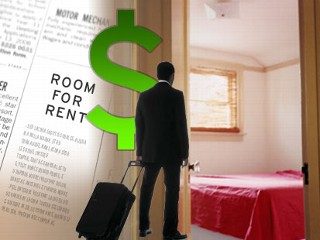
Spare room renting“Having a lodger” or “taking lodgings” are phrases that bring to mind the Victorian era, when widowed ladies rented out rooms in their city homes to single men and women. Though private homes and apartments have since become the norm, the idea of renting a single room in a private home has been steadily increasing, due in part to the difficult economy. For homeowners, the idea of renting out a room has become more and more appealing, so much so that the number of private homeowners renting out a spare room in their home has more than tripled in the past year.

Financial advantages of renting out a spare room

The extra income generated on a monthly basis is one of, if not the, main reasons that people choose to open their homes to a stranger. The amount of rent being charged for a room will vary depending not only on the size of the room and its amenities, but also on where the home is located. A bedroom with bathroom and kitchen privileges may run around $200 per month while a room with a private bathroom en-suite or possibly an efficiency layout with a small refrigerator and microwave could run as much as $500 per month. The type and amount of furnishings, as well as the utilities included will also affect pricing.

Renting out a spare room also allows the homeowner to receive a break on their income taxes by deducting part of their home ownership expenses. Real estate taxes and home mortgage interest are two areas where dividing the property into effectively two homes can save when it comes to tax time. Deductions may also be taken for general maintenance, expenses and repairs to the home, including utility bills and repairs to appliances, as long as these are available to the entire home. Installing utility services directly to the room being let may also be deducted, for example the installation of a cable or phone line.

Financial costs of renting out a spare room

Choosing to rent out a room in the home means the homeowner may have to invest before the profits roll in. The room needs to be properly and simply decorated with a sleeping area the primary focus and a seating area a close second. This may mean carefully selecting furnishings and investing in pieces such as a sleeper sofa or a built-in Murphy bed that are both functional and attractive. Room design and décor may need to be quite different in a rented room than it would be in the rest of the home, with furniture choices and layouts more like those in a studio or efficiency apartment than in a traditional bedroom. The homeowner can save on the furniture by watching for sales and taking advantage of free delivery if available. Neutral color palettes and wood furniture pieces are universally appreciated and allow the tenant some leeway to express themselves and their style by adding accessories and personal items.

Other financial considerations include legal expenses, such as credit checks on prospective tenants and extra home insurance reflecting the new rental status of the property.

How you can save money around the home

Save money at homeThrough necessity, saving money is a preoccupation for many householders. With energy price hikes, rising inflation and wages that never increase, something’s got to give somewhere.

For those looking to shave expenses off their budgets, the home is a good place to start. It is important to save money where we can and when we look more closely at our homes it is often the case that we could be doing things more efficiently. Here are some ideas for making savings across all areas of the home.

Heating and insulation

Keeping warm in winter is certainly not getting any cheaper. Produce savings in modern homes by being flexible with the central heating thermostat. Reducing the temperature by a couple of degrees saves money, but will not be noticeable. Oil heating can be expensive and increasingly householders are opting for wood burning stoves, which offer cheaper fuel alternatives.

Check for draughts and seal around doors, wooden floorboards and around windows to minimise cold air blasting in. Double-glazing helps keep a house warm but if this is too costly, for a fraction of the price plastic film can be applied to windows to make rooms warmer. Simply apply with special tape and shrink with the heat from a hair dryer, the reduction in draughts and condensation will be immediate. Other effective ways of restricting heat loss at windows include solid shutters, heavy curtains and thick blinds.

Other cost saving areas

Half the battle with saving money on energy in the home is down to changing people’s habits. Getting them to switch off lights when they aren’t in use, not leaving gadgets on standby, switching to LED light bulbs, fitting aerating shower heads, using the oven to cook more than one dish or investing in a pressure or slow cooker for cheap delicious meals at low cost – all these small changes can add up to substantial cost reductions.

High-cost appliances

The cost of heating water with electricity is high. Do not overfill the kettle, only boil the water that is required – this is one of the biggest wastes of money and energy in most homes. Only turn on the washing machine when there is a full load. Most clothes can be washed at 30 instead of 40 degrees – lowering the water temperature will scrub money off the laundry bill. Tumble dryers eat energy so if hanging out laundry to line dry is an option, do it for free.

To calculate where money could be saved look at the gadgets or appliances that get used for long periods. LED TVs and game consoles are often in use for hours at a time – research which models are the most efficient before buying, as over a year these savings could mount up. There is a lot of information out there about the most cost effective, energy efficient household appliances. Get into the habit of selecting new big-ticket items such as cookers, fridges and dishwashers based on their energy ratings – the most efficient models are usually pricier, but going for the cheap option is a false economy.

Saving money around the home is all about looking harder at how we do things. Acting upon what we learn will benefit not only our wallets, but mother earth as well.

Finance world changing fast for the depositors – A past & present overview

Manage your financesWe all are using Bank accounts to do proper financial management. Now people hardly keep liquid cash with them, instead of that people are using Debit & Credit cards. Government bank are in the place of trust but private banks are also giving a good competition by providing great services.

Previously people only rely on government banks due to the security factors but now the time has changed people are started relying on private banks for their advanced services. And as both the banks has to fulfill all the standardize rules & guidelines fixed by the central banking authority. Competition is very tuff in both the banks so customers/account holders are getting benefited with this.

As we know that world economy is not in a good position so we all are thinking about our financial future. Now most of the people are appointing financial adviser or taking help from different reputed wealth management companies to place their liquid assets/money for the maximum growth. So, banks are working sometimes as an adviser.

As both the government & private banks are bound to follow the service rules fixed by the central banking system of the respective country but since they are customizing their services to grab the customer’s attention. Few banks are providing different fixed deposit schemes & few banks are concentrating to improvise the recurring deposit schemes to target all type of customers. I know this topic is debatable but since as per my personal experience i can say that both Government & private banks do have some standardize individual identity of providing services to their customers. I do have my personal saving accounts in both the private & government banks & i am very happy with their services or vice verse.

But now coming to the customers side, for making the financial security for the future people are still rely on fixed deposit, recurring deposit, insurance & pensions but I can say the financial sector is changing very fast which we can see in the banking sector, previously they were only the security of our finances but now they are performing as a adviser & also assisting the customer with all their queries. In the other side people are started investing in shares, investment bonds, debenture etc. Longed & parenting by the leading companies of the world.

Positive & negative aspects the sides of a coin which will remain the same but the service will help us to decide the right side & go forward to make our self financially secured.

5 Tips for Developing a Personal Financial Plan

Financial JourneyKeeping a personal budget is not difficult in theory, but it becomes much more difficult to stick with it throughout the month. As a result, it is a good idea to write up a list of tips, as they can keep you focused on the goal at hand. If you can remember these rules, staying within your personal budget becomes much easier.

Avoid Debt

This is the main goal of developing a personal finance plan and it is also the most important thing to remember. You should never spend more money than you earn, as this puts you behind on your quest toward financial freedom.

Once you get yourself out of debt, you can start spending money again. Taking the first step is important, however, and it will take a great deal of discipline.

Pay Yourself First

This might sound like it prolongs your period in debt, but what it truly does is make the situation more livable. Paying yourself does not mean that you go out and blow all of your money right away, but it does mean that you should put money in your savings and retirement funds before you pay your creditors.

By paying yourself first, you ensure that you will always have money around, which can help you to prevent more debt in the future. If you run into an emergency, but have not put enough money into savings, you will end up right back in debt if you do not follow this plan.

Track Expenses

Another difficult aspect of personal finances is tracking your own expenses, but it is very important because it allows you to develop a plan. Save your receipts for everything for a few months, so that you can see exactly what you are spending.

This makes it easier to see where you can cut spending, which allows you to pay off your debt at a faster pace. You would not drive in a strange city without directions or a map, so you should not try to navigate your financial situation without a clear idea of where your money is going.

Stay Within Your Budget

Making a budget is easy, but it is much more difficult to stay within it. If you are committed to saving money, however, a budget can become your best friend.

By giving yourself a monthly allowance, you can be certain that you will never spend more than you make. Of course, that might mean that you have to pass on the Mustang apparel that just went on sale at your favorite store, but it is important as you attempt to reach your financial goals.

Try to Avoid Paying Interest

When you purchase something on credit, you end up paying much more than the sticker price. Therefore, it is always a good idea to save up and pay cash for something, especially if you are making a major purchase.

Of course, it is probably not possible to pay for a new home out of pocket, but you can probably afford to pay for many of your day-to-day expenses without going further into debt.