Posts tagged: economy

Guide to the Different Kinds of US Bonds Available Today

All about US bondsBorrowing money is something that’s hard to avoid, both for individuals and large organizations. Even if you have an ample budget, some investments require more. In a large scale, the government and companies issue bonds to aid in borrowing large sums of money. They receive these funds by issuing bonds, which investors purchase. Most bonds have a maturity date, which is when the issuer must pay the investors back. When this occurs, the investor is awarded additional compensation on top of whatever their initial investment was.

The concept of bonds is fairly straightforward, but identifying the different kinds of bonds available today in the US can be daunting to someone with little bond and investment experience. Yet it’s certainly something to look into, with two primary advantages: purchasing bonds can strengthen one’s financial portfolio, and help them stay knowledgeable about market trends. Substantial income can be earned through investing in the right bonds. In general, the types of bonds are grouped by the type of organization or individual that issues them. There are four primary types of bonds that one can purchase in the US:

Municipal bonds are issued by local government, often to provide funding for local projects like improving school districts, sewage systems, publicly owned airports, and rehabilitation centers. Any capital gain from a municipal bond is taxable, and may be counted as income if sold at a profit prior to maturity. Still, many municipal bonds are exempt from interest via state and/or federal income tax, though this tax advantage does result in lower interest rates.

Your tax bracket is important to keep in mind when deciding to purchase municipal bonds. Use the Taxable Equivalent Yield – which is Tax-exempt yield divided by (1 – your marginal tax rate) – to help identify the yield on a taxable municipal bond. There are tools that calculate Taxable Equivalent Yield, as well. In general, tax-free municipal bonds are not useful for low income brackets, as the taxes they are saving may not compensate for the lower interest rates.

Corporate bonds are issued by corporations in order to expand their business. Its maturity date is often after a year from its issue date, with the occasional “commercial paper” corporate bonds having a shorter maturity span. Standard & Poor’s, Moody’s, and other rating services provide an estimate on whether a corporate bond issuer will be able to meet scheduled payments, with the ‘AAA’ rating having the lowest risk and ‘D’ having the highest risk. Using these ratings can help investors avoid high-risk investments.

Mortgage Backed Securities is a security that involves mortgages, often many mortgages. The multitude of mortgages involved makes it perhaps the most high-risk form of bond investment, but it can also result in some of the highest yields. This is how it works: mortgages are sold to either an investment bank or government agent that combines these loans into a tidy security, which investors can purchase. Unlike other bonds, which have a maturity date, mortgage-backed securities are paid off periodically.Ginnie Mae and Freddie Mac are the most common entities that issue mortgage-backed securities.

U.S. Government Securities present some of the most diverse types of bonds. They are issued by the US Department of Treasury, and exist in periodic additional payments to the bondholder, in addition to the principal amount being reimbursed at the maturity date. The government is the largest issuer of debt securities, and as a result these are considered some of the safest fixed-income investment opportunities. Different types of U.S. government securities include a T-Bill, U.S. Treasury Note, U.S. Treasury Bond, Savings bonds, and zero-coupon bond, the latter of which pays no interest but is issued at a discount that depends on the maturity length. You can purchase U.S. government securities directly though the US Department of Treasury.

DIY Plan: Ingenious ways to manage your credit card debt to attain financial freedom

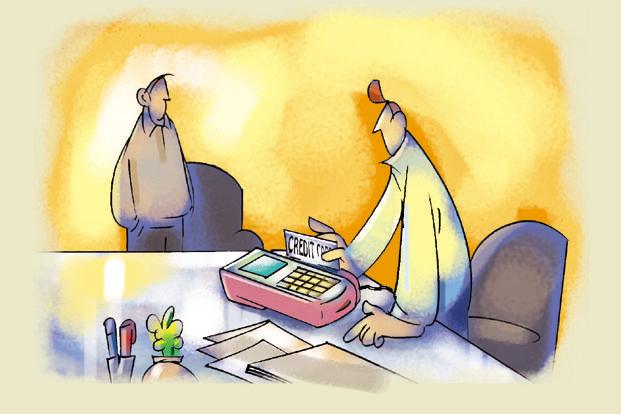
Credit card debt burdenIn this tough economic situation, the livelihood of common man has become miserable. After the recent financial collapse, a large number of people suffered job loss or wage deduction. The condition of the economy is not strong enough to bring over a complete revival of the job market. So, many people are still unemployment. In this scenario, most of them failed to pay of their credit card bills on time and incurred overwhelming debt. If you’re in a similar situation, then you can come out of the debt rut by managing your credit card debt. You’re not required any help from the professionals to come out of this financial maze as you can do it on your own by following some of the simple steps.

Here are some of the important points that you need to consider when you plan to pay off your credit card debts on your own:

Step 1.

Budgeting- A key mantra: It’s needless to say that if you’re planning to manage your credit card debt, you need to start with a budget plan. Well, budgeting is considered to be a key tool to get out of the debt rut. When you’re on a budget plan, it can be easier for you to track your expenses. You can understand where you’re draining your hard earned money. You can avoid splurging when you’re on a budget plan. As a result, you can manage to save considerable amount of money when you’re on a budget plan. Make sure you modify the plan in accordance with the financial situation.

Step 2.

List of the owed amount: Once you formulate a pragmatic budget plan, your next job is to review your financial state. You’re required to prepare a list of the owed amount in descending order of the interest rate. Preparing a list of the owed amount can make it easier for you to pay off the debt.

Step 3.

Approach the creditors for negotiation: You can negotiate with the creditors to lower the interest rate on the principal balance to make the owed amount affordable to pay off. If the creditors don’t agree to negotiate, then you can threaten them to file bankruptcy. In most of the cases, this trick works and you can manage to lower the interest rate on the outstanding amount. Once your interest rate is reduced, you can actually manage to lower your monthly payment.

Step. 4

Avalanche method of payment on the debts: Make sure you prepare a list of the owed amount in descending order of the interest rate. Start paying the high interest debt on top of the chart. Make more payment on the high interest debts, in the meantime make payment on the remaining balance. Once you pay off the high interest debt, start working on next on the list. Try to continue the process diligently unless you pay off the debts in full.

Step 5.

Avoid the use of the plastic: When you’re working on paying off your debts, try to avoid the use of cards. In most of the cases, you find the consumers are tempted to spend when they find teaser offers on the card. Therefore, keep aside your card and spend cash. When you use cash instead of cards then it can be easier for you to stay within your means.

Step 6.

Increase your income: Look for a part time job to make more money during your spare time. You can work as a freelancer or start your own home based business to make some extra cash. You can use the extra money to pay off your debt and regain financial freedom during tough economic situation.

Therefore, you’re required to keep the above mentioned points in mind when you plan to manage your credit card debt on your own. Once you pay off your debts yu can regain control over your financial situation.

Feel Financial Stability at Every Age

New Financial StabilityMost of us complain about the constant lack of money for various reasons – small salary or continuous expenses that have already tortured us. In fact, it is quite realistic to prevent those expenses and become financially stable and independent. It is only a matter of time and your wishes. At every age, whether you are young or old, you should remember that the earlier you start to think about financial stability and savings the more confidence in future you will have. So, let’s see what we can do for this from our early 20s to the time of retirement.

Youth without debt

When being young and beautiful we do not consider us to be already grown up but we are willing to make something meaningful for society. It is often occurs that our deeds do not succeed and we make many mistakes. Indeed, financial responsibilities are wide opened for us and we should already think about contribution to our retirement. Small amount of money saved monthly will help to feel stability and consider plans for future as it is a definite time to find an appropriate job.

The next thing that we need to think about except work is credit cards repayment. We should remember that our 20s is not the age to build up debt. Applying for credit cards or even for school loans we have to be sure in our ability to repay all money in time or even in advance. We do not need debts in such an early age.

More responsibilities need more expenses

The most appropriate age to obtain more life responsibilities is 30s. At this age we have more income, create our own family and even may think about our ability to purchase a good house (often with the help of mortgage). This will be a good age for those who refused to obtain debt when they were 20 years old. By the way, our contribution into retirement should be raised.

The right time to invest

The best time for savings and investment comes with our 40s. At this age we have a good job to provide your family with all needs and the age for more expenses. We can easy go wrong being not careful with everything that concerns money. We should save more, invest more and also pay more attention to retirement planning to be sure that it is all right.

Everything goes right in your 50s

When you are fifty everything has to be under control. You have made the needed sum of money and now it works on you. Even often expenses will not prevent your financial stability. Pay off your mortgage and continue retirement funding.

Time for retirement

Depending on when you wish to retire, all plans should be done – the debt is repaid and the needed sum of money is already saved. Then you will see that all your efforts were not in vain.

When creating and following plans for retirement you should understand that complaining on the money need will not bring success in your life. So, get rid of bad thoughts and start to think about your financial stability.

Diana is an accomplished financial consultant writing about socio-economic problems as well as legal and financial articles on debt, bankruptcy, fast loans online, stock market, credit card, personal injury on various websites. She has been writing for the last 5 years.

4 Great Ways To Cut Down Your Household Spending

Cost cuttingAs you’ve probably heard, the economic climate is harsh at present. Due to the rising prices of many goods, lots of families are feeling the squeeze and putting a lid on their spending. With all this going on, the last thing you might be thinking about right now as a young family is putting money aside for your children’s future – but there’s no guarantee that things will be any easier by the time your child leaves home to go to university, or search for work. No matter how bad things may seem, it’s always a good idea to at least consider putting money into a Children’s ISA.

But with an already squeezed budget, you might be asking yourself: How can it be done? How can I trim our household outgoings any more than I already have?

Here are some ways you can free up money if you’re finding it a struggle to put funds aside:

Cut Down on Unused Luxuries

We all have them: gym memberships we never use; digital channel packages we don’t watch; subscriptions to cookery or gardening magazines we never read but which seemed like a good idea at the time; the list of extraneous luxuries goes on. So, before you make a purchase or a commitment to something which requires a monthly payment plan, stop and think: Do I really need this? Can I live without it? There’s nothing the matter with indulging yourself every now and again, but if you’re going to spend money on a hobby, make sure it’s worthwhile. Remember that this is money you could be putting to better use elsewhere. 

Be Thrifty With Your Utilities 

You might think that switching off the lights in the rooms you’re not in, and not leaving the TV on standby overnight might not make much of a difference – but it all adds up. Being clever with your energy use will not only help to reduce your carbon footprint but will also reap you rewards when you receive your next utility bill – and in turn free up more money to put into your savings.

Eat In More

We all deserve a nice meal out every now and then, especially after a tough week. But it can be easy to cave in to temptation and let this become a regular fixture. Having a meal in a restaurant can seem like such an appetising prospect that we’re often blinded to the cost of it – which doesn’t hit us until we’ve got the check after a round of desserts. If you find yourself eating out regularly, this is a cost you can easily cut out. Treat yourself to a nice meal by all means – but remember that taking out and eating at home, or even cooking a special meal yourself instead of eating out regularly will almost always be cheaper. 

Take Advantage of Deals

In your household, a holiday might be a non-negotiable fixture of your year – and understandably so. We all need to take time out from our busy lifestyles every now and then. But if you’re looking to save money, it pays to seek out deals and offers and get in there early. If you’re booking a summer holiday, try and plan it in January or even before if you can, and the chances are there’ll be a host of early bird price deals on offer.

The Benefits of Seeking Professional Debt Assistance

Debt problem & assistanceFacing debt alone can be a challenging and frustrating experience. Unfortunately, getting into debt happens a lot quicker and easier than getting out of it, and the journey to becoming debt free can sometimes feel unsurmountable. The hardest step is admitting that you might need to seek help, so here are a few of the great benefits that you can experience from seeking professional debt assistance.

Assessing the Situation

A professional consultant will be able to take stock of your financial situation and give you an honest appraisal of your debt. The amount may be more or less than you initially thought, as people often don’t look at the sum of their debts as a whole. The next step is often to discuss your current budgeting strategies, and work out ways to help you immediately make small changes to improve your situation. Having an objective opinion on your debt is an invaluable benefit of seeking professional debt assistance.

Preventing Further Damage

Another important advantage of accessing expert help is that they can assist you to cease potentially damaging habits right away. Protecting your credit rating is a very important financial goal, and your consultant will be able to ensure that you retain the best possible ranking. In addition, they will be able to negotiate with your creditors, often forming agreements that will allow you to pay reduced amounts every month until you are back on track. This allows you to start working off your debts without worrying about defaulting on your loans.

Strategies that Work

Perhaps the greatest benefit of seeking professional debt assistance is that you will be presented with a range of strategies and solutions that are proven to work. Everyone’s financial situation is different, so a good consultant will tailor their solutions package to best suit your needs.

Peace of Mind

By accessing professional assistance, you can be confident that your debt is in the right hands. The most important thing to consider when selecting a debt solutions specialist is ensuring that they are reputable and professional. Unfortunately some companies simply aim to take advantage of your vulnerable financial situation, and can leave you with even worse debt than when you started. Choose a widely recognised and trusted name, such as Australian Debt Reduction. With great customer testimonials and acclaim from the media, you can be comfortable knowing that you are being looked after by a true professional who has your best financial interests at heart.

Stress Less, and Enjoy Life Again

Financial stress is one of the worst things to have to experience. It sits in the back of your mind every day, producing feelings of guilt, frustration and helplessness. Imagine getting your life back without having to worry about your debt every single day. By seeking professional debt assistance, you know that you have taken a big positive step towards eliminating your debts, and can start to focus on enjoying life once again.

Don’t let debt ruin your life, take control of your financial situation and get help today. By seeking professional debt assistance, you are proactively combating your issues with debt. It’s not easy, but with some expert assistance, you will be well on your way to a debt free life sooner than you might think!