Posts tagged: financial planning

5 Facts About Credit Repair From The FTC

The economy over the past few years hit millions of consumers hard and as a result, many are trying to fix the damage that was done to their credit reports. Without a good credit score, it can be nearly impossible to rent an apartment, get a checking account or even find a job.

Before you agree to work with any credit repair agency, there are five facts that you need to know.

Do Your Research on Credit Repair Firms

Be wary of any credit repair company that solicits you, whether it’s through email, direct mail or by phone. This is a multi-million dollar industry and unfortunately, you can’t automatically give a company your trust simply because they sound legit.
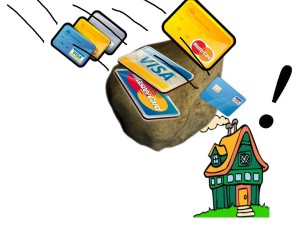
credit repair

It is vital to do your own research on a credit repair firm before proceeding. First and foremost, you should never have to pay for this service until the promised work has been done. Avoid any company that requires you to make an upfront payment in order to “fix” your credit. Even if they claim they will be incurring expenses on your behalf in order to contact your bill collectors and the credit bureaus, you don’t have to pay anything before they do the work. In fact, the Credit Repair Organization Act has made it illegal for these companies to charge you in advance.

Another red flag to look for is a credit repair company that encourages you not to contact the three main credit bureaus, Experian, Equifax and Transunion. Under the Fair Credit Reporting Act, you, the consumer, have every right to contact the bureaus and dispute any information that may be invalid.

Understand Your Rights

Before you work with a credit repair agency, it is vital to fully understand your rights as a consumer. The Fair Credit Reporting Act and the Credit Repair Organization Act both contain information that you need to know in order to protect yourself, both from debt collectors and from shady credit repair companies.

The CROA states that credit repair agencies must provide you, in writing, your legal rights and how they will go about repairing your credit, the amount of time they estimate it will take to accomplish this, and how much you will have to pay to complete the work. Any guarantees they make must be made in writing.

Promises They Can’t Keep

If a credit repair agency tells you that they can remove all of the negative information from your credit report, this tells you that they are not being honest with you. Only negative information on your report that is invalid can be removed. Even if you pay off your debt, the entry will remain on your credit report for a period of up to 10 years.

The dispute process provided by the three main credit bureaus is designed to ensure that all of the information on your credit report is accurate, whether or not it is positive or negative to you. You cannot dispute a debt that is legally yours and have it removed from your credit report. If this was true, no one would have any negative entries on their credit reports.

Creating a “New” Identity

Another common “promise” you may run into with some credit repair agencies is that you can create an entirely new credit identity and you won’t have to worry about your past mistakes. This is completely false and fraudulent and you may end up facing prosecution as a result of this tactic.

If a credit repair agency urges you to apply for an Employer Identification Number (EIN) or encourages you to falsely claim identity theft in order to get a new social security number, this is your best indication that you are dealing with a scam artist. Unfortunately, many consumers find this out the hard way, after they are already in legal problems due to lying on loan applications or misrepresenting their social security number.

Understand Your Options

Don’t get disheartened. Just because there are a lot of wolves in sheep’s clothing doesn’t mean that all credit repair options are bad. There are reputable credit counselors out there who can assist you in legally repairing your credit and getting your life back on track.

The author who contributed this article is Chase Sagum, Financial and Business blogger. Check out more of his content at www.lexingtonlaw.com.

The Benefits Of Online Personal Loan Providers

iStock_000009217829XSmallPersonal loans can be acquired from a whole assortment of online lending companies (-and financial institutions) that offer unsecured and secured personal loans. If you require a small, unsecured personal loan or a large personal loan tolling in the thousands of dollars – There are numerous loan options available from various online loan providers. Online lending institutions that specialise in personal loans can provide fast, convenient and proficient service through online application- and approval procedures. Individuals can obtain personal loans for any reason, without being questioned as to why you require the loan.

An online personal loan can be obtained even if the individual taking out the loan has bad- or no credit history. Subject to the kind of personal loan one applies for, collateral is not required for certain personal loan types. Smaller personal loans (-under $1000) are typically easier to acquire with no collateral requirements. Secured personal loans in larger amounts (-more than $1000) are also attainable, depending on the terms and conditions of the online lending company. Also, researching numerous lending institutions in order to find the appropriate personal loan type for your situation – is imperative. Online lending institutions provide application forms for the various types of personal loans they offer. These online application forms should also answer many of your loan related queries as you apply.

Unsecured personal loans on the other hand are loans that are offered at a higher interest rate, because the lack of collateral adds a risk factor to the lending institution. Generally, these online lending institutions favour loan applicants that have good credit. In other words, anyone with a clean/good credit history should easily find personal loan providers that will approve their personal loan application. Personal loan providers do typically offer loans for people with bad credit, but then again – the interest rates on these loans are usually higher. The financial risk is more pronounced in these loans, and therefore lending institutions are obliged to charge more for extending loans to clients of high risk.

A secured personal loan is usually easier to obtain, since collateral is put up to secure the loan amount. As a result, lending institutions are guaranteed of their investment in case the client defaults on a loan, plus consumers can easily acquire a personal loan if they have collateral to offer. Things like houses, property, cars, jewels, and any other valuable asset can be provided as collateral for a personal loan.

No matter what your financial necessities might be, there are legitimate lending institutions all over the internet that can help you to determine which loan type best suites your financial situation.

This article was provided by food lover and financial guru, ScribeZA, for an online financial institution that provides unsecured and secured personal loans.

What Is Business Interruption Insurance?

Commercial-InsuranceStandard business property insurance policies only cover the potential loss of physical assets experienced in the case of a natural disaster. Traditional policies do not cover any potential loss in profits, temporary relocation expenses, continued operating costs or other additional expenses that the business may incur while repairs are being made. This is where business interruption insurance comes in. Added as a rider onto an already existing property insurance policy, it helps businesses continue to operate optimally during the unforeseen whims of nature.

Good For Any Business

Any business that has the possibility of being stuck by a disaster can benefit from interruption insurance. Obviously those businesses based in areas more prone to nature’s influence, such as coastal areas, will be more likely to find this type of insurance necessary. Just because the business isn’t located in hurricane alley however, doesn’t mean that interruption insurance is useless. It can be used to mitigate the financial impact of severe snowstorms, tornadoes, floods, earthquakes or any other disasters that causes property damage. Obviously, the greater risk the business is at, the higher the policy costs will be.

Acquiring Interruption Insurance

The step when considering business interruption insurance is to determine what level of coverage the business requires. Generate a list of all disaster related expenses including:

  • Regular operating costs: This all includes items the business will still have to pay during the repair period, including payroll, rent, loan payments, etc. Utility expenses such as electricity are often not included as part of standard interruption insurance, so it may be necessary to ask about those provisions specifically.
  • Projections of lost profits: Gather a history of profits to make accurate projections, and if the business is growing be sure to include potential growth in these figures. Keeping hard copies of these records in another location is wise; not much would be worse than being unable to file a claim because financial records are unavailable.
  • Relocation expenses: It is likely that any disaster shutting down a business will render facilities at least temporarily unusable. Include costs for finding, outfitting, and moving equipment and personnel to a new location.

Ensuring the policy lasts enough to ensure a return to normal business is essential. Repairs oftentimes take longer than expected, and having cash-flow run out in the middle of them can potentially ruin a business. A good baseline to start from is six months, though that figure should be adjusted based on how much infrastructure the business has that may need repairing. Most policies don’t kick in until 48 hours after a disaster, so it is also important to have enough cash on hand to survive those first two days.

All About Stability

Business interruption insurance is intended to allow business to maintain financial stability as though a disaster had never occurred. These disasters are becoming more common, with a 50 percent increase in disaster frequency being reported by some insurance companies over the past few years. This increase makes it worth at least exploring the idea of business interruption insurance, whether it is a small local business or a large corporation.

Sarah works for Aor Insurances and writes all thier marketing material.

Grown Up Money Tips You Can Learn From Tom Hanks In The Film ‘Big’

money-treeDo you remember the 1988 comedy starring Tom Hanks as Josh Baskin; the 12 year old boy who wishes on an enchanted fairground fortune teller machine to be “big” and wakes up the next morning aged to an adult overnight? “Big” is the “13 going on 30” of the 80s and if you haven’t seen it, find yourself a copy and make some popcorn. Not only is this sweet and funny 80s comedy entertaining, it actually can teach you a lot about money management and success.

Here are a few of the lessons that this classic film has to offer:

You are Richer than You Think

While Josh is trapped in the body of a 30 year old man and is trying to figure out how to get back to his normal 12 year old self, he rents a room in New York City and finds himself a job at the MacMillan Toy Company.

There is a great scene where Josh receives his first pay check and when he opens it he loudly exclaims “A HUNDRED AND EIGHTY SEVEN DOLLARS?” Josh is obviously thrilled by this amount of money but Scotty, his cubicle neighbour, assumes that his surprise is negative and remarks “Yeah, they really screw you don’t they?”

Josh’s pay, calculated for inflation since 1988, is really only moderately higher than minimum wage. Scotty, the adult, sees this amount as practically worthless and not enough to get by on. However, from a kid’s perspective it is a fortune. It’s enough for Josh to pay his rent and treat himself and his best friend to pizza, snacks, soda and much more.

What this scene really shows us is the reality of lifestyle inflation. As we get older, we tend to continue to increase our lifestyle to match our pay with nicer clothes, cars, houses, etc. After we get our first raise, the money we lived happily on before is just not enough anymore. This means that we never really feel like we have enough extra money to save or do the things we want.

Think about this in your own life; have you inflated your lifestyle to match your earnings? What would a younger version of yourself think about how much you are earning and how much you are spending?

You’ll Earn More Money When You Love Your Job

After a while of working in his entry level job, Josh runs into the owner of the company Mr. MacMillan at the famous NYC toy shop FAO Schwarz (remember the iconic giant keyboard scene?). He impresses him with his extensive knowledge of current toys and his vibrant youthful enthusiasm, (which comes as no surprise, because he is a 12 year old after all). Mr. MacMillan offers him a promotion to the ultimate child’s dream job: Toy Tester.

Now Josh is getting paid a huge wage and he is able to move out of his dodgy flophouse and into a gorgeous apartment which he fills with a pinball machine, a trampoline and a Pepsi vending machine. His success brings incredible jealousy from his workmates, including ultra-competitive Paul Davenport.

But there is a reason why Josh gets the sweet high paying job and Paul doesn’t; it’s because Josh has a passion and a love for the business whereas Paul only wanted the promotion for the money. When you go into a career that you love and are passionate about, that will be naturally reflected in your performance. Your enthusiasm will make you great at what you do, which will increase your potential for success.

These are just a few lessons that we can learn from the classic 1980s comedy ‘Big’. Who knew a kid trapped in an adult’s body would have so much to teach us about money and success?

Sarah Fox is a finance blogger and huge 80s movie fan. She provides her readers with helpful tips for everything from finding payday loans online to balancing their family expenses.

Benefits Of Merchant Cash Advances

Merchant Cash AdvancesStatistics have shown that the majority of failed small businesses lack underfunding and adequate capital investment. As a small business owner, it can be difficult to find the right funding source to meet the investment levels that will ensure your business has a fair chance for success in the market. A merchant cash advance is an alternative cash source that may be an ideal way for your business to get the funding it needs without the added risk of a conventional loan.

Is a Merchant Cash Advance the Same as a Loan?

When a small business loan is contracted by a business owner, the principle amount is paid back through payments that include interest. The interest rates on small business loans tend to be less reasonable for new businesses simply because they lack the merchant credit history that is required to garner a low interest rate. Merchant cash advances are different from loans because they are based on a flat fee rather than interest. The money is paid back automatically without further action by the merchant.

How Does a Merchant Cash Advance Work?

Any business that has accepted credit card sales for more than 60 days is typically eligible for a merchant cash advance. The provider in this case is known as a factoring company. When applying, the factoring company will agree to a lump-sum payment to the applicant business in the form of an agreed amount. The business owner is then free to invest the new capital into his immediate operation. The factoring company then retrieves the investment from credit card sales payments that are made to the merchant from credit card companies in lieu of that merchant until the full amount of the cash advance and the flat-rate fee have been retrieved.

What Are the Benefits to a Merchant Cash Advance?

The most significant benefit is that the flat-rate fee associated with the transaction is highly competitive with interest rates because it does not continually accrue over the duration of the outstanding debt. Another benefit is that the risk of repayment default is lower due to the fact that the initial principle is retrieved according to the natural influx of credit card receipts. The principle is not based on a strict, predetermined timetable.

The merchant cash advance is intended to stimulate an immediate cash flow investment that is then repaid at a prorated pace according to credit card sales. The majority of small businesses that need extra funds can benefit greatly from merchant cash advances.

Fred often writes articles on how small businesses can improve their cash flow problems. He believes that a merchant cash advance company can be an excellent solution for many companies in this situation.